


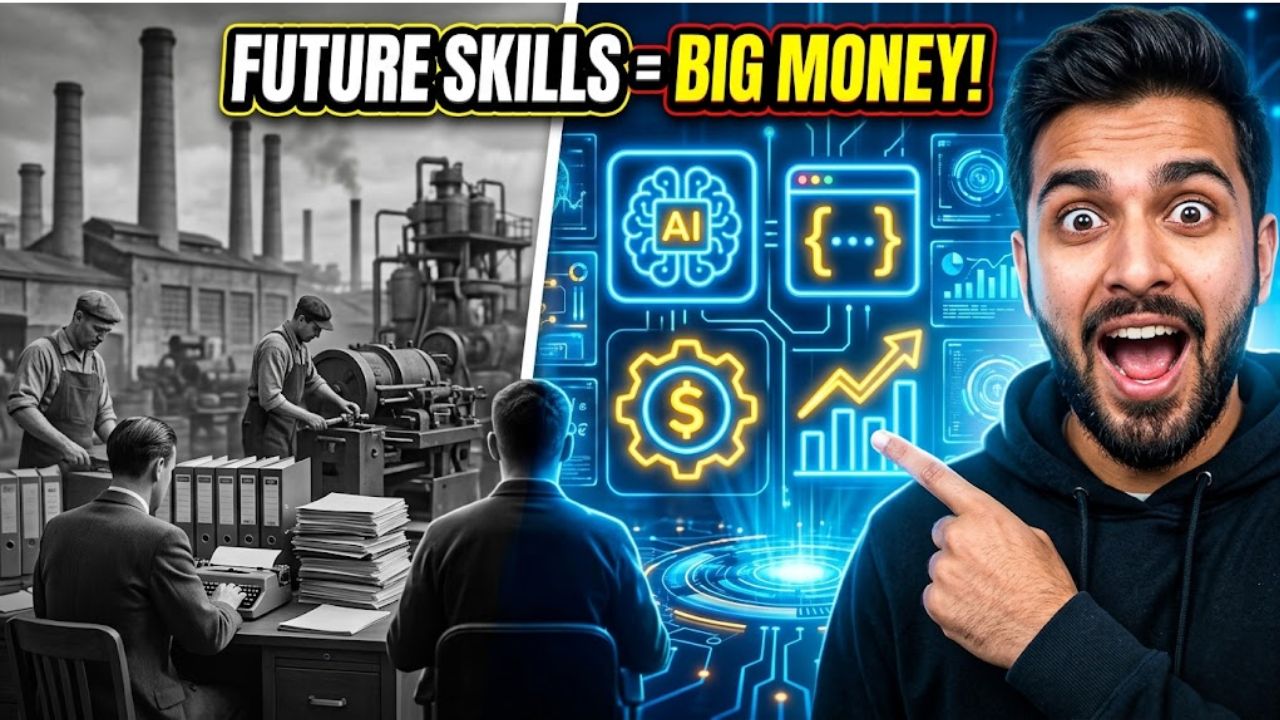
The job market is changing faster than ever before. In fact, skills that were considered valuable just five years ago are already becoming outdated. So, if you are someone who is planning your career right now, you need to think ahead. Choosing the right skills today will not only keep you relevant but also make you highly valuable in the future workplace. In this article, we will walk you through the most in-demand skills for the next 10 years, so you can make smarter career decisions and stay ahead of the competition.
Why Choosing the Right Skills Matters for Your Future Career
Before diving into the list, it is important to understand why skill selection matters so much. The World Economic Forum has already predicted that automation and artificial intelligence will displace millions of jobs globally by 2030. However, these same technologies will also create entirely new roles that do not even exist today. Therefore, the smartest move you can make right now is to invest in skills that machines cannot easily replace and that employers will actively hunt for in the coming decade.
Moreover, choosing future-proof skills does not always mean going into pure tech. In fact, a combination of technical knowledge and human-centered abilities will make you truly unstoppable in any industry. So, let us break it all down for you.
Artificial Intelligence and Machine Learning Skills
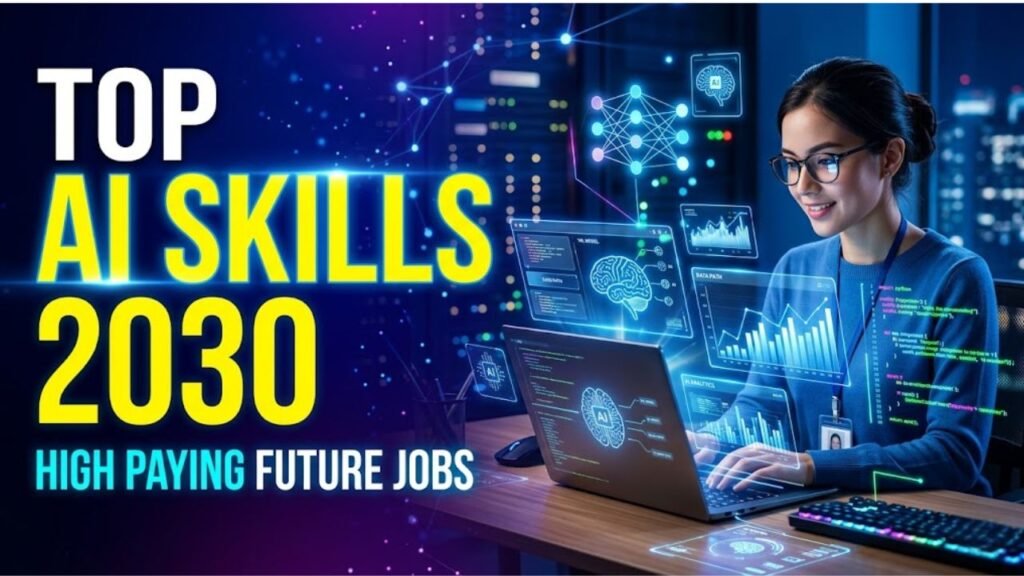
Without a doubt, Artificial Intelligence (AI) and Machine Learning (ML) top the list of the most in-demand skills for the next 10 years. Companies across every industry, including healthcare, finance, retail, and education, are actively adopting AI to automate processes and gain competitive advantages. As a result, professionals who understand how to build, train, and deploy AI models will always have a seat at the table.
Additionally, you do not need to become a hardcore researcher to benefit from this field. Even understanding how to use AI tools, interpret AI-driven data, or integrate machine learning APIs into business workflows can make you extremely hireable. Tools like Python, TensorFlow, and PyTorch are great starting points. Meanwhile, platforms like Coursera, edX, and Google offer beginner-friendly AI and ML courses that you can start today.
| Skill Area | Key Tools and Platforms | Average Salary (Global) |
|---|---|---|
| Machine Learning | Python, TensorFlow, PyTorch | $110,000 to $160,000/year |
| AI Product Development | OpenAI API, Hugging Face | $120,000 to $180,000/year |
| Data Science | R, Pandas, Jupyter | $95,000 to $140,000/year |
Data Analytics and Data Literacy Skills
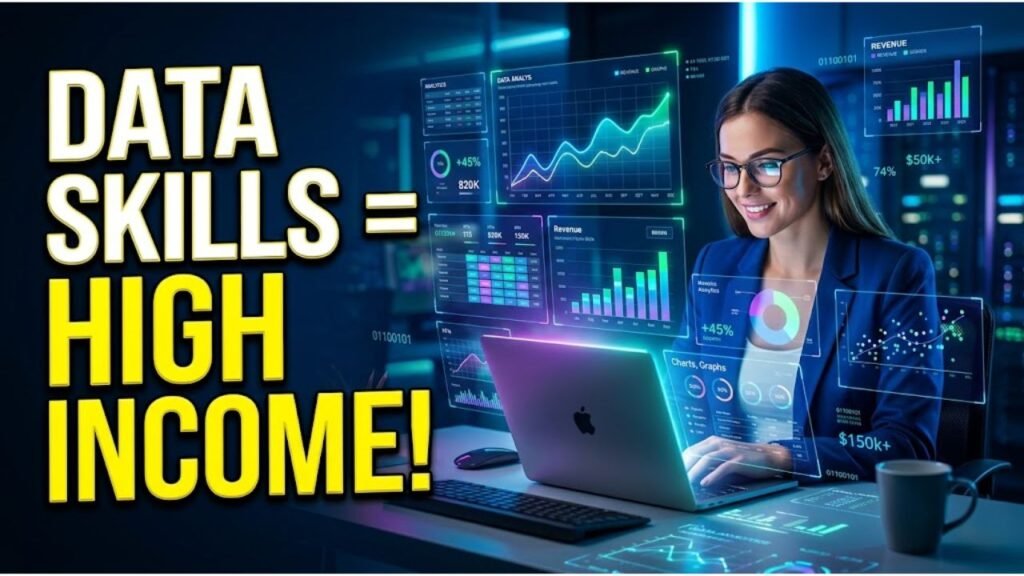
In today’s world, data is often called the new oil, and for good reason. Businesses generate enormous volumes of data every single day. However, raw data on its own means nothing without someone who can analyze it, interpret it, and turn it into actionable insights. Consequently, data analysts and data-literate professionals are becoming some of the most sought-after workers in the global job market.
Furthermore, data literacy is no longer limited to data scientists alone. Marketing teams, HR departments, supply chain managers, and even educators are expected to work with data confidently. Therefore, building your data skills, whether through Excel, SQL, Power BI, or Tableau, will give you a significant edge over your peers. In addition, understanding basic statistics and data visualization will help you communicate findings clearly and effectively to stakeholders.
Cybersecurity Skills and Digital Safety Knowledge

As the world becomes more connected, cybercrime is growing at an alarming rate. In fact, cybersecurity breaches cost the global economy trillions of dollars every year, and that number continues to rise. As a result, organizations of every size are desperately looking for professionals who can protect their digital assets, systems, and customer data.
Moreover, cybersecurity is one of those rare fields where demand significantly outpaces supply. According to industry reports, there will be a shortage of over 3.5 million cybersecurity professionals globally by 2025. Therefore, if you build expertise in ethical hacking, network security, cloud security, or risk management, you will essentially be writing your own career ticket. Additionally, certifications like CompTIA Security+, Certified Ethical Hacker (CEH), and CISSP are widely recognized and highly respected by employers worldwide.
| Cybersecurity Role | Key Skills Required | Job Demand Level |
|---|---|---|
| Ethical Hacker | Penetration testing, Kali Linux | Very High |
| Cloud Security Specialist | AWS, Azure, Zero Trust | Extremely High |
| Security Analyst | SIEM tools, Threat detection | High |
Cloud Computing and DevOps Skills

Cloud computing has completely transformed the way businesses operate. Instead of maintaining expensive physical servers, companies now rely on platforms like Amazon Web Services (AWS), Microsoft Azure, and Google Cloud to store data, run applications, and scale their operations. Consequently, professionals with hands-on cloud computing experience are in extremely high demand across industries.
In addition, DevOps, which bridges the gap between software development and IT operations, is also growing rapidly. DevOps professionals help companies release software updates faster, more reliably, and with fewer errors. Therefore, learning tools like Docker, Kubernetes, Jenkins, and Terraform alongside cloud platforms can open up some of the most lucrative career opportunities available today. Furthermore, cloud certifications from AWS, Google, and Microsoft are globally respected and can dramatically boost your earning potential.
Emotional Intelligence and Leadership Skills
Here is something that surprises many people: emotional intelligence (EQ) ranks among the most in-demand skills for the next 10 years. While automation handles repetitive tasks, human connection, empathy, and leadership become even more valuable. In fact, the World Economic Forum consistently lists emotional intelligence as one of the top workplace skills of the future.
Moreover, emotionally intelligent leaders can motivate teams, navigate conflicts, make better decisions under pressure, and build stronger workplace cultures. Meanwhile, businesses that prioritize EQ in their hiring process typically see higher employee retention and better overall performance. Therefore, if you work on developing your self-awareness, empathy, communication, and conflict-resolution skills, you will naturally stand out in any professional environment. In addition, leadership training programs, mentorship, and even therapy or coaching can all contribute to building a higher EQ.
Digital Marketing and Content Strategy Skills
The internet is not going anywhere, and neither is the need for smart digital marketers. In fact, as more businesses shift their operations online, the demand for professionals who understand SEO, social media strategy, content marketing, email campaigns, and paid advertising continues to grow consistently. Therefore, digital marketing skills offer a reliable and flexible career path for the next decade and beyond.
Additionally, content creation has evolved into a powerful business skill in its own right. Brands need storytellers, video creators, copywriters, and strategists who can capture attention in a noisy digital world. Meanwhile, understanding platforms like Google Ads, Meta Business Suite, HubSpot, and analytics tools like Google Analytics will make you a well-rounded digital marketer. Furthermore, the rise of AI-powered marketing tools means that professionals who can combine creative thinking with data-driven strategies will be the most valuable of all.
| Digital Marketing Skill | Tools to Learn | Demand Level |
|---|---|---|
| Search Engine Optimization | Ahrefs, SEMrush, Google Search Console | Very High |
| Paid Advertising (PPC) | Google Ads, Meta Ads | High |
| Content Strategy | HubSpot, WordPress, Canva | High |
| Email Marketing | Mailchimp, Klaviyo | Moderate to High |
Healthcare and Biotechnology Skills
The global pandemic made one thing crystal clear: healthcare is one of the most essential and resilient industries in the world. Moreover, advancements in biotechnology, genomics, telemedicine, and personalized medicine are creating a new generation of high-paying healthcare roles. Consequently, professionals with backgrounds in nursing, pharmacy, medical coding, health informatics, or biotech research will remain in strong demand for decades to come.
In addition, the intersection of technology and healthcare is producing exciting new careers. For example, health data analysts, telemedicine coordinators, AI health diagnostics specialists, and medical device developers are all roles that simply did not exist in their current form ten years ago. Therefore, combining a passion for healthcare with digital or analytical skills can position you at the forefront of one of the fastest-growing sectors in the global economy.
Green Energy and Sustainability Skills
The world is moving toward a cleaner, greener future, and this shift is creating a massive wave of new job opportunities. Governments, corporations, and startups are investing billions into renewable energy, sustainable construction, electric vehicles, and carbon reduction technologies. As a result, professionals with expertise in solar energy, wind power, environmental engineering, sustainable supply chains, and ESG (Environmental, Social, and Governance) reporting are becoming incredibly valuable.
Moreover, sustainability is no longer just a concern for environmental scientists. In fact, accountants, lawyers, marketers, and engineers are all being asked to incorporate sustainability thinking into their daily work. Therefore, gaining at least a foundational understanding of green practices and sustainability frameworks will make you more competitive in virtually any industry. Additionally, certifications in LEED, sustainability management, or renewable energy systems can give your career a meaningful boost.
Critical Thinking and Problem-Solving Skills
No matter how advanced technology becomes, critical thinking will always remain a fundamentally human advantage. In fact, as AI handles more routine analytical tasks, employers are placing a higher premium on workers who can think creatively, challenge assumptions, and solve complex, ambiguous problems. Consequently, sharpening your critical thinking skills is one of the smartest investments you can make for your career.
Furthermore, problem-solving is not just for engineers or scientists. In every industry, professionals who can identify root causes, evaluate multiple solutions, and implement effective strategies will always be in demand. Meanwhile, you can develop these skills through practice, reading widely, taking on challenging projects, and consistently asking the question “why” rather than accepting things at face value. In addition, frameworks like design thinking, Six Sigma, and Agile methodology can give you structured approaches to solving problems at work.
UX Design and Human-Centered Design Skills
As digital products multiply, businesses have realized that user experience (UX) can make or break their success. A brilliant product with poor UX will always lose to a simpler product with a smooth, intuitive experience. Therefore, UX designers who understand human psychology, usability testing, wireframing, and prototyping are in very high demand across tech companies, startups, and even traditional businesses going digital.
Moreover, UX design is also a field that values creativity alongside analytical thinking, making it a great fit for people who are not strictly technical but still want a rewarding career in the digital space. Additionally, tools like Figma, Adobe XD, and Sketch have become industry standards, and learning them can help you build an impressive portfolio relatively quickly. In addition, the demand for UI/UX designers is expected to grow by over 23% in the next decade, making it one of the most promising career paths available today.
Final Thoughts on High Demand Skills for the Next 10 Years
The future of work is full of opportunity, but only for those who prepare for it. As we have discussed, the skills that will matter most over the next decade combine technical knowledge with deeply human qualities like empathy, creativity, and critical thinking. Therefore, the best approach is to identify which of these skill areas aligns with your existing strengths and genuine interests, and then invest consistently in building expertise in that direction.
Moreover, the good news is that you do not need to master everything on this list. Instead, focus on one or two core skill areas, build real-world experience, and stay curious about how your field is evolving. In addition, continuous learning through online courses, certifications, workshops, and practical projects will ensure that your skills stay sharp and relevant no matter how the job market shifts. Consequently, by starting today, you give yourself the best possible chance of building a future-proof career that is both financially rewarding and personally fulfilling.
FAQs: High Demand Skills for the Next 10 Years
What are the most in-demand skills for the next 10 years?
The most in-demand skills for the next 10 years include Artificial Intelligence, Data Analytics, Cybersecurity, Cloud Computing, Emotional Intelligence, Digital Marketing, UX Design, and Green Energy expertise. These skills span both technical and human-centered abilities that automation cannot easily replace.
Which skill is best to learn for a high-paying career in the future?
Cybersecurity, AI and Machine Learning, and Cloud Computing are currently among the highest-paying skill areas globally. Professionals with expertise in these fields can earn anywhere between $95,000 and $180,000 per year, depending on their role, experience, and location.
Can non-technical people also build future-proof careers?
Absolutely. Skills like Emotional Intelligence, Digital Marketing, Content Strategy, UX Design, and Sustainability Management are highly valued and do not require a deep technical background. Combining soft skills with basic digital literacy can open up many rewarding career paths.
How long does it take to learn high-demand skills?
It depends on the skill and your starting point. Many foundational skills in digital marketing, data analytics, or UX design can be learned within 3 to 6 months through dedicated online courses. More advanced skills like AI development or cybersecurity may take 1 to 2 years of consistent learning and practice.
Where can I learn these high-demand skills online?
You can learn these skills on trusted platforms like Coursera, edX, Udemy, LinkedIn Learning, Google Career Certificates, and Khan Academy. Many of these platforms offer free or affordable courses with recognized certifications that can strengthen your resume and professional profile.
See also:
- UPSRTC Female Bus Conductor Recruitment 2026: Apply Offline, 2584 Vacancies, Eligibility & Full Details
- UPTET 2026 Online Form: Apply Date, Eligibility, Fees & Complete Guide
- UPSSSC ASO Recruitment 2026: Apply Online for 929 Assistant Statistical Officer Posts
- SSB Recruitment 2026: 1194 Vacancies for Constable, HC, ASI & SI – Apply Online, Eligibility, Dates
- Bank of Baroda WMS Recruitment 2026: 104 Vacancies, Apply Online Before 16 April